The Dance Between Man and Machine
By · Comments
Navigating the AI Revolution: A Musician’s Battle to Preserve the Human Soul in Art
For over four decades, music has been the heartbeat of my life. As a songwriter, performer, and recording artist, I’ve danced with technology from its nascent stages—embracing the early Roland MC-8 and MC-500 microcomposer sequencers and integrating Mac computers alongside live musicians. From those early beginnings till now technology tools expanded my creative horizons, allowing me to explore new sounds and push my artistic boundaries. Yet, as Artificial Intelligence (AI) strides into the creative arena, I find myself grappling with a profound concern: Is AI enhancing our artistry, or is it poised to extinguish the very soul that makes music human?
When The Machines Misses the Beat
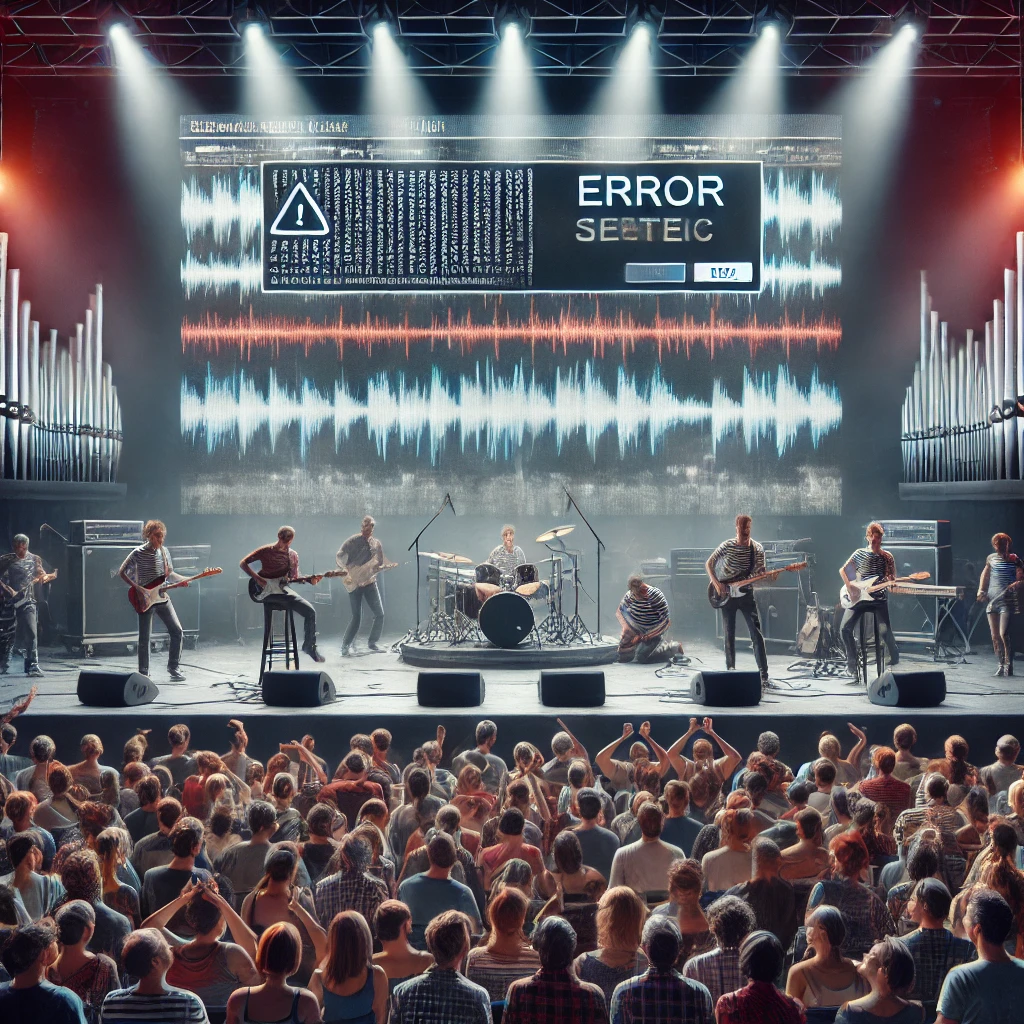
Technology has always been a double-edged sword in the arts. I vividly remember a gig with an audience of thousands where a technological glitch sent my carefully crafted song spiraling into chaos. The “tech musician”, our digital heartbeat, had a fit and failed to sync with us live musicians. Unlike a human bandmate who would improvise, and connect with other musicians to get back on track, the “machine” couldn’t creatively adapt in the moment. The song crashed, leaving us stranded in disarray. This moment was a stark reminder that while technology can amplify our capabilities, it lacks the innate human ability and manner of responding to unexpected challenges with grace and intuition. What will AI do when unexpected chaos occurs and it finds the humans are not syncing with it.
AI: A Promising Partner or a Perilous Rival?
Sam Altman, CEO of OpenAI, envisions a future where AI transforms the economy by creating new roles and augmenting human skills. In his interview with Inc. he argues that AI’s “raw intellectual horsepower” cannot replace uniquely human traits like empathy, emotional intelligence, and creative problem-solving. While I resonate with this optimism, my passion for music fuels a different concern: What if AI doesn’t just augment but begins to replace us?
AI’s intrusion into music production is undeniable. From pitch correction to generating entire soundtracks, AI tools are becoming indispensable. Yet, the essence of creativity—connecting disparate ideas, infusing personal experiences, and evoking genuine emotions—remains elusive for machines. AI can mimic, but can it truly feel? Does it even need to feel if it creates music of a qaulity that is indistinguishable from human works? This question haunts me as I watch AI-generated music being consumed without recognition of its artificial origins. The high quality is impressive, but to me it’s hollow—a perfect echo devoid of the human spirit. What do the fans think and do they care?
The Erosion of Authenticity
Authenticity is the lifeblood of art. Every lyric I write, every note I play, carries a piece of my soul. AI may produce technically flawless compositions, but it lacks the emotional depth and personal narratives that resonate deeply with listeners. When AI-generated music becomes indistinguishable from human-created pieces, we risk diluting the authenticity that makes art meaningful. It’s not just about creating sound; it’s about conveying stories, emotions, and experiences that only a human can authentically express. At least I think it is.
The Grim Reality of Job Displacement

I’m guilty. I’ve stood in presentations citing how although the Industrial Revolution destroyed many jobs overnight they were replaced by other kinds of work … so what’s the problem? Promises of AI creating new jobs ring hollow for many artists. Talented songwriters and industry professionals are being displaced by AI tools, with little to no opportunities for meaningful replacement. The assurance that AI will generate new roles hasn’t materialised for those whose livelihoods depend on their creative skills. Instead, we face a stark reality where machines encroach upon our craft, eroding the very foundation of our careers. This displacement is not just a loss of jobs; it’s a loss of identity and purpose for countless artists who pour their hearts into their work.
Ethical Quagmires: Copyright and Ownership
AI’s ability to reinterpret and synthesise existing human works poses significant ethical dilemmas. Who owns the rights to an AI-generated song that borrows from countless human creations? The current industry response is inadequate, often ignoring the blatant infringement on artists’ intellectual property. AI doesn’t create in a vacuum; it stands on the shoulders of human ingenuity, yet the rightful owners of original works find their contributions hijacked without recognition or compensation, and due to the process AI uses they have no evidence that they have been stolen from. This blatant disregard for copyright principles undermines the integrity of artistic creation and threatens the very essence of ownership in the creative process.
A Plea for Lifelong Learning and Human-Centric Creativity
To navigate this tumultuous landscape, creatives must embrace lifelong learning and adaptability. Continuously developing new skills and staying updated on the latest AI tools and technologies is essential. Additionally, focusing on cultivating creativity—asking insightful questions, connecting seemingly unrelated ideas, and approaching challenges from fresh perspectives—will help artists maintain their unique edge. These are the very qualities that make our art irreplaceable.
Embracing AI as a True Collaborator
AI should be a collaborator, not a competitor. By experimenting with AI as a creative tool, musicians can enhance their work and explore new frontiers. Yet, it’s imperative to maintain control over the creative process, ensuring that the human element remains at the forefront. AI can handle the mundane, allowing us to focus on what truly matters: the emotional and expressive aspects of our art.
Protecting the Human Soul in an AI-Driven World

The future of work in an AI-driven world is fraught with both opportunities and challenges. As musicians and creatives, our mission is to harness AI’s capabilities to augment our creativity while fiercely protecting the authenticity and emotional depth that define our work. Technology should serve to enrich our artistic endeavors, not overshadow the human touch that makes art profoundly meaningful.
We stand at a crossroads where the fusion of music and technology can lead to unparalleled innovation or the erosion of our creative essence. By prioritizing uniquely human skills and addressing the ethical concerns surrounding AI, we can navigate this revolution with passion and integrity. Let us embrace the future with caution and creativity, ensuring that the soul of our art remains untouched by the cold precision of machines.

Imagine having a robot buddy who’s not just smart but also loves helping you learn new languages. Meet Norby, the adorable AI-powered companion designed to make language learning as fun as playing your favorite game. Whether your kiddo is tackling Spanish, Mandarin, or any other language, Norby is here to turn the learning grind into an exciting adventure!
Why Norby Was ‘Born’
Every great invention starts with a story, and Norby is no exception. Adrian Mullan, the genius behind Norby, knows exactly how tricky learning a new language can be. Growing up with Irish and Chinese roots, Adrian spent countless Saturdays wrestling with Mandarin—think endless repetition and memorization that felt more like a chore than a challenge. Fast forward to today, when his daughter faced the same struggles, Adrian thought, “There has to be a better way!” And voilà, Norby was born—a robot friend that makes learning a new language feel less like homework and more like playtime.
How Norby Makes Learning a Blast
Let’s face it, traditional language apps can be as exciting as watching paint dry. Norby changes the game with features that keep kids engaged and eager to learn:
- Chatty Conversations: Instead of just drilling vocabulary, Norby engages kids in fun chats about things they love—whether it’s superheroes, animals, or space adventures. It’s like talking to a friend who’s always up for a good conversation.
- Personalized Praise: Norby doesn’t just listen; it adapts! By tuning into each child’s learning pace, Norby offers tailored feedback and encouragement, making every lesson feel like it was designed just for them.
- Multilingual Magic: From a curious eight-year-old in Tokyo learning English to an elderly grandparent brushing up on Spanish, Norby effortlessly handles different accents, proficiency levels, and even local slang. It’s like having a language coach who’s always on point.
Behind the Scenes: Norby’s Superpowers
Creating a charming and intelligent robot like Norby isn’t just about good vibes—it takes some serious tech wizardry. Here’s how the magic happens:
Smart AI Brain: Norby uses cutting-edge AI to understand and respond naturally in conversations. This means no awkward pauses or robotic replies—just smooth, meaningful interactions that keep kids hooked.
Robust Hardware: Thanks to powerful tools from tech giants like Dell and NVIDIA, Norby’s creators built a robot that’s both brainy and reliable. These technologies help Norby think on its feet and handle all the cool features that make learning effective and enjoyable.
Happy Kids, Happy Parents
Don’t just take our word for it—here’s what some of Norby’s fans have to say:
- Emily, 9, from Sydney: “I love talking to Norby! It’s like having a friend who helps me practice English without making me feel silly.”
- Liam, 7, from Melbourne: “Norby makes learning Mandarin fun. We play games and tell stories together, and I actually look forward to my lessons.”
What’s Next for Norby? The Sky’s the Limit!
Norby is just getting started, and the future looks bright (and multilingual)! The team is gearing up to bring Norby to more schools, language centers, and homes around the globe. Here’s what’s on the horizon:
- More Languages, More Fun: Expanding from 20 to over 40 languages, with even more on the way. Imagine your child learning Japanese, French, or Swahili with Norby by their side!
- Cool New Features: From interactive games to virtual storytelling sessions, Norby is continuously evolving to keep learning fresh and exciting.
- Wider Reach: Plans are in motion to introduce Norby in elderly care facilities and hospitals, helping people of all ages and backgrounds connect through language.
Why Norby Rocks
In today’s global village, knowing multiple languages is a superpower. Norby not only helps kids learn new languages but also boosts their confidence and communication skills. With Norby as their trusty sidekick, children are empowered to explore different cultures and connect with others in meaningful ways.
With Norby, language learning is no longer a daunting task but a delightful journey filled with fun, friends, and endless possibilities. Let’s make learning languages as exciting as it should be—together with Norby!
Anyone who follows the evolving role of technology in global affairs might have noticed a growing conversation around data, artificial intelligence, and the concept of sovereignty. In Michael Dell’s recent LinkedIn article titled The Rise of the Sovereign, he initially highlights how individuals and organizations are asserting greater control over their digital destinies. But if you look at the broader tech landscape, the same notion applies on a national scale, with countries worldwide striving to develop powerful AI models rooted in their own data and infrastructure.
I work at Dell, and while I find Michael Dell’s perspective engaging, this post isn’t about cheerleading for the company. Rather, it’s a reflection on what “sovereignty” means in the context of national technology strategies—particularly when it comes to our data and the world of AI.
1. Data as a Strategic Asset
In today’s world, data goes far beyond a raw resource: it’s a strategic commodity. Nations are recognizing that controlling data flows is akin to controlling vital infrastructure like roads or power grids. If a country can amass quality data—especially around demographics, health, and economic transactions—it can use this data to train AI models that offer genuine competitive advantages, whether in defence, public health, or critical resource management.
This focus on data “ownership” or control has led to a wave of legislation and policy frameworks around data residency, privacy, and sharing. We see it in regulations like the EU’s GDPR, China’s cybersecurity laws, and various national data governance mandates. What was once the domain of corporate policies is now a matter of state-level strategy.
2. Infrastructure: The Next Battleground
Owning or having direct access to vast amounts of data is one piece of the puzzle. Another critical piece is the infrastructure required to store, process, and analyze it at scale. This includes high-performance computing clusters, specialized AI chips, and robust cloud environments.
Countries that invest heavily in cloud data centers, supercomputers, and next-generation networking—think 5G and beyond—are positioning themselves to run complex AI models faster and more efficiently. Others, lacking similar resources, risk falling behind. Infrastructure capacity isn’t just about hardware and networks; it includes human capital. Skilled data scientists, machine learning engineers, and software developers form the backbone of these ambitious initiatives. Without the right talent, even cutting-edge servers and near-limitless data won’t yield transformative AI solutions.
3. AI as a Tool of Influence
Why does AI matter so much to national sovereignty? Because it’s increasingly a determinant of global influence. AI-driven insights can help nations optimize everything from energy consumption to healthcare outcomes, creating tangible benefits for citizens. In the defence sphere, AI can improve surveillance, cybersecurity, and predictive analytics for military planning.
But the influence extends beyond pure functionality. Countries leading the AI race can export technology, set international standards, and shape ethical frameworks—effectively writing the rulebook for others to follow. This leads to a self-reinforcing cycle: nations that have strong AI capabilities attract more investment and talent, further solidifying their leadership.
4. Balancing Collaboration and Competition
Despite the race for AI supremacy, collaboration still plays a significant role. Many nations understand that innovative breakthroughs often result from collective efforts—cross-border research, open-source frameworks, and shared standards. Global challenges like pandemics or climate change demand solutions that go beyond one nation’s borders.
However, tension arises when the benefits of collaboration collide with a desire for self-sufficiency. Data-sharing agreements, for instance, might accelerate AI advancements but also raise privacy and national security concerns. Sovereignty often involves deciding what to keep in-house versus what to share—finding a delicate balance that protects strategic interests without stifling innovation.
5. Ethics, Privacy, and Control
AI sovereignty isn’t just about who wields the technology; it’s also about how responsibly it’s used. As nations invest in AI, questions around surveillance, civil liberties, and algorithmic bias become central. Collecting enormous swaths of data can undermine individual privacy rights if not managed ethically.
Where does accountability lie when an AI system used for public services makes a life-altering decision? Who owns the algorithms that determine whether someone qualifies for housing assistance or a loan? These concerns underscore that sovereignty also includes moral stewardship. Nations that promote transparent, equitable AI policies may gain international trust and set themselves up as leaders in ethical tech governance.
6. The Role of Private Industry
In many cases, governments rely on partnerships with tech companies to build or maintain advanced systems. These partnerships can be mutually beneficial—governments gain access to innovation and expertise, while private firms secure major contracts and global exposure. However, potential conflicts of interest can arise. If a single multinational corporation provides critical infrastructure, does the country truly “own” its data, or does it risk dependence?
Working at Dell, I’ve seen how various institutions balance these concerns. Ideally, public-private collaborations marry the efficiency of the private sector with the public interest. But it’s up to governments to maintain sovereignty by ensuring that core data and AI initiatives align with national priorities, not just corporate profit.
Final Thoughts
Michael Dell’s concept of the “sovereign” resonates deeply with a global movement in which nations assert ownership over data and AI capabilities. It’s about more than technology adoption; it’s about strategic positioning, national security, and the ethical framework that binds people and institutions together. As AI becomes increasingly central to economic and social development, data sovereignty will continue to shape how nations operate—and ultimately how power and influence are distributed across the globe.
If you haven’t read The Rise of the Sovereign, it’s worth your time. It provides a lens into why controlling your own destiny—be it personal, corporate, or national—remains at the heart of technological advancement in the 21st century.
If you’ve spent more than five minutes in the world of cloud storage, you know the feeling: you spin up volumes in AWS or Azure, everything seems golden—until usage spikes, the monthly bill climbs higher than a Kiwi bungy jumper, and you end up juggling multiple dashboards like a circus performer. Yes, cloud is amazing, but it also ushers in a host of potential headaches.
The Aussie Connection (and a Hint of Rivalry)

Public cloud providers have been in Australia for quite a while—AWS launched a Sydney region in 2012—so Aussie companies have had a solid head start. Now that a wave of public cloud offerings is finally arriving in New Zealand, we Kiwis can do one of two things: lean into our All Blacks vs. Wallabies rivalry and refuse to listen to the Aussies’ cautionary tales—because, let’s be honest, we love beating them in rugby—or glean some valuable lessons from their experiences. Some Aussie businesses dove in headfirst, then realized public cloud can come with unexpected bills, performance quirks, and data issues. Maybe, just maybe, we can learn from their missteps—even if we’d never say that about rugby.
1. “My Bill Is How High?”
One of the biggest “gotchas” in public cloud storage often boils down to pricing. Whether you’re in Auckland, Wellington, or Sydney, you pay by capacity, performance, and snapshots—and costs can balloon quickly.

Potential Fix: Some platforms bundle performance and capacity in more predictable ways. For instance, Dell APEX Block Storage for Public Cloud (APEX) is cited in a Silverton Consulting study for potentially delivering up to 87% savings compared to AWS EBS. Regardless of your provider, thin provisioning—paying only for what you use—is a key strategy for keeping finances under control.
2. The “Performance on a Budget” Puzzle
Data-intensive workloads often need more horsepower. In many native cloud models, cranking up performance can be pricey or complicated.
Potential Fix: Seek a storage solution that scales capacity and IOPS simultaneously. For example, APEX automatically ramps up performance with each new storage node. Even if you pick another provider, make sure you won’t break the bank just because your app suddenly goes viral.
3. Data Mobility: The Slow Shuffle
Ideally, data would move seamlessly between on-prem, and clouds. In reality, migrations can be cumbersome, especially when snapshot-based replication is involved.
Potential Fix: Look for asynchronous replication tools that simplify transfers. APEX uses PowerFlex’s Software Data Replicator (SDR), but the key takeaway is to avoid multi-step, error-prone processes. Any tool that streamlines these migrations is worth serious consideration.
4. When an AZ Goes Dark
Occasional downtime does happen, even to the biggest cloud providers. If an entire Availability Zone (AZ) fails, your data could go dark with it.
Potential Fix: Solutions that aim for six-nines (99.9999%) availability often stretch data across multiple AZs, this doesn’t ensure redundancy unless you lose the data centre … which is unlikely in today’s world. Whether it’s APEX or something else, design for high availability within a data centre from the start.
5. TCO: Bottom-Line Clarity
Beyond monthly costs is the total cost of ownership (TCO), which also includes administrative overhead, downtime impact, and training. The real MVP is the solution that provides easy management without blowing your budget.
Potential Fix: Evaluate how well a platform fits your existing toolset, and whether it automates routine tasks. The fewer manual interventions, the happier your team—and your bottom line—will be.
6. “Cloud or Not?” — The Data Sovereignty Twist
Sometimes, public cloud might not be a perfect match—especially if you need to have your data secure. The big American cloud providers still have hidden costs and compliance complexities that can keep you up at night while introducing a lack of keeping your data within you sovereign landscape.

Potential Fix: If you want the best of cloud without worrying about data flying halfway around the globe, consider working with a local Cloud Service Provider. For instance, Datacom partners with Dell to provide regional cloud solutions that deliver elasticity and flexible pricing—minus the compliance guesswork. Keeping your data on Kiwi soil means it’s safer, easier to manage, and likely meets local data sovereignty requirements more comfortably.
Final Thoughts
While it’s tempting to dismiss Aussie feedback (especially when we pride ourselves on our rugby supremacy), the lessons from their longer experience with public cloud are invaluable. Cloud adoption has enormous perks—speed, scale, flexibility—but comes with potential stumbles around cost, performance, management, and data sovereignty. Whether you opt for Dell APEX Block Storage for Public Cloud, a competing platform, or go with local providers like Datacom, the goal remains the same: find a strategy that balances finances, control, and availability. Then, even if you can’t top the All Blacks in rugby, at least your cloud game will be on point.
If you’re as fascinated by the intersection of AI and technology as I am, you’ll want to hear about some groundbreaking developments that happened this month. These innovations are not just shaping the tech landscape but also making significant strides in enhancing productivity and efficiency for businesses and individuals alike.
Dell Enterprise Hub on Hugging Face
One of the most exciting announcements is the Dell Enterprise Hub on Hugging Face. This platform is designed to simplify the deployment of AI models, making it easier for developers and data scientists to leverage cutting-edge AI technology. The partnership between Dell and Hugging Face provides an open, secure ecosystem where you can deploy large language models (LLMs) efficiently on Dell’s robust infrastructure. It’s a game-changer for anyone working with AI, offering streamlined access to tools and models that can accelerate innovation and productivity (Dell).
Comprehensive Portfolio of AI PCs
Dell also introduced a comprehensive portfolio of AI PCs, branded as Copilot+ PCs. These devices are powered by Snapdragon® processors and integrate local AI processing capabilities, ensuring groundbreaking performance and battery life. These PCs are designed to handle AI tasks with ease, offering up to 45 trillion operations per second on the neural processing unit (NPU). Whether you’re a business professional, student, or creative, these AI PCs are built to enhance your productivity and efficiency, allowing you to focus more on strategic tasks and less on the mundane (Dell).
Why It Matters
These advancements from Dell highlight a broader trend in the tech industry: the move towards making AI accessible and practical for everyday use. By integrating AI into PCs, providing robust platforms for AI development, and offering comprehensive enterprise solutions, Dell is positioning itself at the forefront of this AI revolution. These technologies not only boost productivity and innovation but also make sophisticated AI tools accessible to a wider audience.
If you’re curious to dive deeper into these topics, you can check out more details on Dell’s initiatives and how they are shaping the future of AI and technology. Happy exploring!
For further reading, visit the articles from Dell Technologies:
How Can We Reclaim Our Most Precious Resource: Time
By · Comments In today’s fast-paced world, time is the one commodity we can’t make more of. How we spend our precious minutes and hours is more critical than ever, and that’s where AI (Artificial Intelligence) steps in. AI is revolutionizing how we manage and utilize our time, offering us tools and technologies that handle mundane tasks, provide insightful data analysis, and even predict future trends. Let’s dive into how AI can help us save time and make our lives a bit easier, with some insights from industry experts like Michael Dell.
The Human Limitation: Time
As humans, we’re constantly juggling multiple tasks, whether it’s at work, at home, or during our leisure time. The idea of having an assistant that can handle repetitive, time-consuming tasks sounds like a dream come true. That’s essentially what AI offers—a digital assistant that can manage your schedule, sort your emails, and even remind you to take breaks. This means more time for creativity, strategic thinking, and the activities you love.
Automating the Mundane
One of the biggest advantages of AI is its ability to automate repetitive tasks. Imagine a world where your emails are sorted, your meetings are scheduled, and your daily to-do list is prioritized without you lifting a finger. AI tools like natural language processing (NLP) and machine learning algorithms can sift through data faster and more accurately than any human. This not only frees up time but also reduces errors, ensuring that you’re always on top of your game.
Insights from Michael Dell
In a recent interview with CNBC, Michael Dell shared his perspective on how AI is transforming the way we work and live. He emphasized that AI’s ability to analyze vast amounts of data in real-time is a game-changer for businesses and individuals alike. Dell mentioned, “AI is like having a superpower. It takes care of the grunt work, leaving you with more time to focus on what really matters.” You can watch the full interview here.
Predictive Power
Another way AI saves time is through its predictive capabilities. By analyzing past behaviors and patterns, AI can forecast future trends and behaviors. This is particularly useful in industries like finance, healthcare, and retail, where predicting trends can lead to better decision-making and efficiency. For individuals, this means smarter personal finance management, health monitoring, and even shopping habits.
Enhancing Productivity
 AI isn’t just about doing tasks faster; it’s also about doing them better. AI tools can provide insights that help you make more informed decisions. For instance, AI-driven analytics can show you which projects are most profitable, which tasks can be delegated, and how to optimize your workflow. This kind of data-driven decision-making is invaluable for maximizing productivity and achieving better results with less effort.
Personalized Experiences
AI also has the power to personalize experiences in ways we couldn’t have imagined a few years ago. From personalized learning paths to customized shopping experiences, AI tailors interactions to meet individual needs and preferences. This not only saves time but also enhances the overall experience, making interactions more meaningful and efficient.
The Future is Now
While some may view AI as a futuristic concept, the reality is that AI is already here, making significant impacts on our daily lives. Whether it’s through voice assistants like Siri and Alexa or more complex applications in business analytics, AI is becoming an integral part of how we manage our time and resources.
Final Thoughts
Embracing AI is about working smarter, not harder. By automating mundane tasks, providing predictive insights, and enhancing productivity, AI helps us reclaim our time and focus on what truly matters. As Michael Dell aptly puts it, AI is like having a superpower that transforms the way we work and live. So, why not harness this power to make your life easier and more efficient?
Curious about how AI can transform your life? Dive deeper by watching Michael Dell’s interview on AI here. Happy time-saving! 🚀 #AIRevolution #TimeManagement #TechInnovatio
If you’re into tech or just curious about the latest trends, you’ve probably heard of AI (Artificial Intelligence). It’s the technology promising to revolutionize everything from shopping to healthcare. But how can businesses harness this power efficiently? Enter the Dell AI Factory.
What Exactly is the Dell AI Factory?
Imagine the Dell AI Factory as a one-stop shop for all things AI within an enterprise. Think of it as a factory, but for data and intelligence rather than cars or gadgets. The Dell AI Factory provides a comprehensive suite of tools, infrastructure, and support to help businesses develop, deploy, and manage AI applications seamlessly.
This integrated ecosystem combines high-performance computing (HPC), data management, and AI software solutions into a unified framework. Instead of piecing together disparate tools and services, businesses get a cohesive package that just works, allowing them to focus on innovation.
Why is it Important?
The Dell AI Factory streamlines the often complex and fragmented process of AI development. Typically, setting up an AI project involves numerous steps—data collection, preprocessing, model training, deployment, and monitoring. Each of these steps requires different tools and expertise. The Dell AI Factory brings all these elements together, reducing complexity and enabling businesses to focus on innovation.
Moreover, the AI Factory supports scalability. Whether you’re a startup experimenting with your first AI model or a large enterprise running multiple AI-driven processes, the Dell AI Factory provides the necessary infrastructure to scale your efforts efficiently.
Insights from Industry Leaders
Michael Dell, the founder and CEO of Dell Technologies, emphasizes the democratizing aspect of the AI Factory. He mentions that the goal is to make AI accessible to businesses of all sizes by removing barriers of complexity and cost. Check out his thoughts here.
PK Gupta, a Senior Director at Dell, highlights the robustness and scalability of the AI Factory. He talks about how it provides an end-to-end solution that scales with your needs, from prototyping to production. This is crucial for businesses that want to start small and expand their AI capabilities over time. You can read more from PK Gupta here.
Danny Elmarji, Dell’s Vice President for Pre-Sales in APJ, shares his excitement about the potential for innovation. He points out that the Dell AI Factory is not just about technology but also about enabling the next wave of innovation across industries. This perspective is vital because it shows that the AI Factory is designed to drive real-world applications and transformative changes. Learn more from Danny Elmarji here.
Breaking Down the Components
To make things clearer, here are the core components of the Dell AI Factory:
- High-Performance Computing (HPC): This provides the muscle needed to handle large datasets and complex computations quickly.
- Data Management Solutions: Efficiently store, process, and manage vast amounts of data, which is the lifeblood of any AI project.
- AI Software and Tools: A suite of AI frameworks and libraries to develop models, run experiments, and deploy solutions.
- Expert Support: Access to AI and data science experts who can provide guidance and support throughout your AI journey.
Real-World Applications
Imagine a healthcare company using the Dell AI Factory to develop a model that predicts patient outcomes based on medical history and current health data. Or a retail business using it to optimize supply chain management through predictive analytics. The possibilities are endless, and the Dell AI Factory is there to turn these possibilities into reality.
Wrapping Up
In a nutshell, the Dell AI Factory is all about simplifying and democratizing AI. It provides the tools, infrastructure, and expertise needed to transform AI from a buzzword into a powerful tool for innovation. Whether you’re a small business or a large enterprise, the Dell AI Factory offers a path to harnessing the full potential of AI.
Curious to learn more? Dive deeper into what the Dell AI Factory can do for you by exploring insights from Michael Dell, PK Gupta, and Danny Elmarji through their posts. Happy innovating! 🚀
AI vs. Peter Woolston: Stay Relevant or Face the Music
By · CommentsIf you’ve been keeping an eye on the rapid advancements in AI, especially in the creative fields like music, you might be feeling a mix of excitement and a bit of existential dread so I thought I’d give my opinion on the impact of AI on human creativity and its implications for us musicians.

The AI Invasion in Music
AI is no longer just a tool for analyzing data or automating tasks—it’s making waves in the music industry too. From composing symphonies to generating pop hits, AI is proving it can do a lot more than we initially thought. For instance, AI platforms like AIVA and Udio are enabling users to create music by simply describing the kind of track they want. These tools can produce sophisticated, high-quality compositions that might make you question whether a human or a machine created them. They’re good at it … real good.
Should We Be Worried?
As a musician who’s been crafting songs for decades, the thought of AI encroaching on our creative turf can be unsettling. But here’s the thing: AI isn’t here to replace us; it’s here to enhance what we do. Think of it as having a supercharged collaborator who can churn out endless ideas and riffs, leaving us with more time to focus on the emotional and human aspects of our art. Sure, AI can generate music, but it can’t replicate the soul and experience we pour into our work. To be fair anyone creating music for background or synchronisation will face a challenge as the “human connection” to the artist is not as present.
Staying Relevant
So, how do we stay relevant in this AI-driven world? By doing what we do best—being human. Embrace the technology and use it to your advantage. Let AI handle the repetitive tasks or help brainstorm new ideas, but always add your unique touch. Remember, music is about connection and emotion between people, something AI can mimic but not truly understand. Keep honing your craft, experiment with AI tools, and find a balance that works for you.
The Future of Music
 Looking ahead, the fusion of AI and human creativity is where the magic happens. Imagine collaborating with an AI that can instantly generate a backing track while you focus on lyrics and melody. Or using AI to analyze your songs and suggest tweaks to make them even better. The possibilities are endless, and it’s up to us to leverage these tools to push the boundaries of what’s possible in music.
Final Thoughts
In the end, it’s not about AI versus humans. It’s about how we can work together to create something truly extraordinary. AI is a powerful ally that can help us explore new creative frontiers. So, don’t fear the rise of AI—embrace it, experiment with it, and let it inspire you to create music that resonates on a deeper level.
For more insights, check out the original article on Unite.AI. Keep creating, keep innovating, and let’s make some great music together!
Women Rock!
By · CommentsOn this International Women’s Day, we celebrate and honour all women as equal and powerful rocking world-changers! From boardrooms to living rooms, stages and more, women are always able to change the world and give us a hope for a better day, especially true during these uncertain times.
Women ROCK!

You can get stuck doing VDI the old way with the complexity of running and maintaining old platforms, but VxRail from VMware and Dell EMC gives you tomorrow’s hyper-converged VDI appliances without the trouble of traditional siloed applications that are so “yesterday”.

Unfortunately, VDI never stays static, needing patches and upgrades and maintenance all the time. But VxRail delivers one click nondestructive patches and upgrades, scaling from 80 to six hundred virtual desktops per appliance, with a maximum of nine thousand six hundred virtual desktops.
The Beatles were right about managing your VDI …. but only when you have VxRail can you sit back and “Let It Be.

VxRail brings a full suite of industry leading data service “friends” – replication, backup and recovery. But you also keep the buddies who already have. It’s built on VMware, so you manage VxRail through vCenter – VxRail lets you hang out with the friends you already know and brings new ones too.

You don’t have much money left after VDI’s normal power, infrastructure, data center floor space and high administrative and operational costs.
But VxRail reduces the data center footprint, saves on power and on infrastructure while minimizing Admin burdens and operational costs. You can predictably evolve your VDI in an easy, repeatable and flexible on demand modular way with VxRail.

It sure sounds like the Beatles had a VDI problem. You know, different vendors in the VDI stack pointing blame at each other.
They needed VxRail’s single point 24×7 global hardware and software support. There’s remote heartbeat monitoring, diagnostics and repair, with proactive fault detection going on all the time from Dell EMC’ single point accountability, world class service and support. VxRail brings an end to the blame-game finger pointing.

Dell EMC’s VxRail … that’s how you take your VDI song and “make it better” [ROFL]